
Title II of the CAA requires EPA to develop fuel and emission standards for mobile sources. The Agency is required to set standards applicable to the emissions of any air pollutant from any class or classes of new motor vehicles or new motor vehicle engines, which, in the judgment of the Administrator, cause or contribute to air pollution which may reasonably be anticipated to “endanger” public health and the environment.
On December 7, 2009, the EPA Administrator signed two distinct findings regarding greenhouse gases under section 202(a) of the Clean Air Act:
This finding provided the basis for regulations, including the SAFE (Safer Affordable Fuel-Efficient) and CAFE (Corporate Average Fuel Economy), but also identified GHGs as a regulated pollutant under the CAA, and provided the basis for regulation under the ambient air programs as well.
Section 242 of the CAA – Clean fuel standards.
The NTAA used to operate the Mobile Sources Work Group, which was formed to address pollution and emissions issues stemming from transportation and other mobile sources. The work of the Mobile Sources Work Group has since been taken over by ITEP’s Tribal Clean Transportation Program (TCTP). Find more information, clean transportation resources, and webinar recordings on ITEP’s TCTP webpage.
Corporate Average Fuel Economy (CAFE) Standards
EPA and the National Highway Traffic Safety Administration (NHTSA) jointly set and enforce the national program for light-duty vehicles, greenhouse gas (GHG) emissions, and Corporate Average Fuel Economy (CAFE) standards.
The National Highway Traffic Safety Administration (NHTSA), on behalf of the Department of Transportation (DOT), is proposing to roll back and weaken CAFE standards to 2022 levels. The NTAA opposes this proposed rollback and is submitting a comment letter to the National Highway Traffic Safety Administration. The letter raises concerns about the health impacts of higher concentrations of volatile organic compounds (VOCs) and oxides of nitrogen (NOx) from emissions of gasoline-powered and diesel-powered motor vehicles, as well as concerns about the impacts of climate change due to increased greenhouse gas emissions. The letter will soon be available on NTAA’s Policy Resource Kit webpage.
SAFE (Safer Affordable Fuel Efficient) Vehicles Rules
What is the California Waiver?
Under Section 209 of the Clean Air Act, California is allowed to set its own vehicle emissions standards that are stricter than federal requirements, due to its unique air quality challenges. Because California accounts for a large share of U.S. auto sales, its standards influence the entire market. Other states can adopt California’s standards under Section 177.
SAFE, SAFE-1 and SAFE-2
California first gained authority to set stricter vehicle emissions standards under the Clean Air Act in 1967, formally codified in 1970. The Obama Administration introduced the SAFE Vehicles Rule (Phase 1 and 2) to improve fuel efficiency and reduce greenhouse gas emissions nationwide. In 2012, California launched its Advanced Clean Cars Program, and the EPA granted a waiver in 2013.
Under the Trump Administration, the EPA revoked the Obama Administration’s SAFE Vehicles Rule, breaking the reconsideration into two parts: 1) SAFE-1, leading to the withdrawal of the California waiver, and 2) SAFE-2, which addressed the fuel efficiency standards.
The Biden Administration reinstated California’s waiver in 2022, restoring its ability to set tougher GHG and zero-emission vehicle requirements, though litigation over its special status continues today. Biden’s EPA and NHTSA reversed the rollbacks of SAFE-2, aiming to restore stronger standards.
On May 1, 2019, EPA Region 9 issued a final General Permit under the Clean Air Act Tribal Minor New Source Review program at 49.151 through 49.161 (Tribal Minor NSR program). This General Permit is available for gasoline dispensing facilities (GDFs), such as gas stations, located in Indian country within the geographical boundaries of California.
For information on GDFs in Indian country outside of California:
5 Source Categories – Gasoline Dispensing Facilities (Final Rule)
There are more than 230 cruise ships operating world wide. Cruise ships are akin to floating cities, providing many of the same services that small cities or towns provide to their citizens. These vessels can carry as many as 3,000 passengers and crew members, and often operate in coastal waters near Tribal lands. As the cruise ship industry continues to expand, there is an increasing concern about the environmental impacts of cruise ship discharges.
Piston-engine aircraft operating on leaded aviation gasoline are the largest remaining aggregate source of lead emissions to air in the US. The EPA is evaluating the air quality impact of lead emissions from aircraft using leaded aviation gasoline as described in the Federal Lead Action Plan to Reduce Childhood Lead Exposures and Associated Health Impacts and in response to petitioners’ requests.
SAFE
During the first Trump Administration, the NTAA commented on the initial SAFE Vehicles proposal. NTAA called the new standards a setback for air quality and environmental policy and said they overlooked the adverse impact on Tribal health and the environment from the air pollution and greenhouse gas emissions from cars and light trucks.
Advanced Clean Cars Program
Fact Sheet on SAFE Vehicle Rule
Comment Letter on SAFE
Proposed SAFE Vehicles Rule Webinar
Presentation to NTAA on the Safer Affordable Fuel-Efficient Vehicles Proposed Rule
In 2021, NTAA developed a PRK for the Biden EPA’s Reconsideration of the Safer Affordable Fuel-Efficient Vehicles Rule Part One: One National Program (SAFE-1) and then another PRK in 2022 for EPA’s Proposed Rule to Reduce Air Pollution from Highway Heavy-Duty Vehicles and Engines. Both can be found on the PRK webpage under the subsequent years.
DERA (Diesel Emissions Reduction Act)
On October 14, 2020, NTAA submitted a letter to the U.S. Department of Justice (DOJ) to comment on the Proposed Consent Decree Between the United States Environmental Protection Agency, the California Air Resources Board and Daimler to Settle Complaint for Civil Penalties and Injunctive Relief for Violations of the Clean Air Act, Civil Action No.: 1:20-cv-2564 (D. D.C). NTAA’s comments urge better Tribal consultation by DOJ to provide better mitigation actions as part of the settlement. You can find the consent decree here. California’s Air Resources Board has filed a separate consent decree that applies only in California that can be found here.
On May 7, 2020, the NTAA Mobile Sources Work Group hosted representatives from the EPA to present an overview of information on diesel fuels and engines. The recordings of the presentations can be accessed below. The “Fuels” presentation is on the left, and the “Engines” presentation is on the right.
NTAA Letter to EPA with Recommendations on Tribal DERA Program – On January 10, 2020, the NTAA EC and Mobile Sources Work Group submitted this letter to the EPA to provide recommendations on how to improve the Tribal Diesel Emissions Reductions Act (Tribal DERA) program so that it is more fully utilized, better meets the goals of the program, and better serves Indian Country.

This virtual workshop was held on August 4th in lieu of NTAA’s Mobile Sources Work Group monthly call. This workshop will help Tribes learn how to access EPA’s $5 Billion investment for the Clean School Bus Program (CSBP). For the next 5 years, Tribes and Tribal Schools are prioritized for funding new electric and cleaner school buses. Applications for the first year of funding closes on August 19th!
Clean Cities and Communities (CC&C) is a U.S. Department of Energy (DOE) partnership to advance alternative transportation nationwide. More than 75 DOE-designated CC&C coalitions work locally in urban, suburban, and rural communities to strengthen the nation’s environment, energy security, and economic prosperity. As partners with DOE’s Vehicle Technologies Office (VTO), coalitions work to deploy affordable and efficient transportation fuels; energy-efficient mobility systems; and other fuel-saving technologies and practices. CC&C builds collaborations at the local, regional, state, and national levels, provides information on funding opportunities, and offers technical assistance.
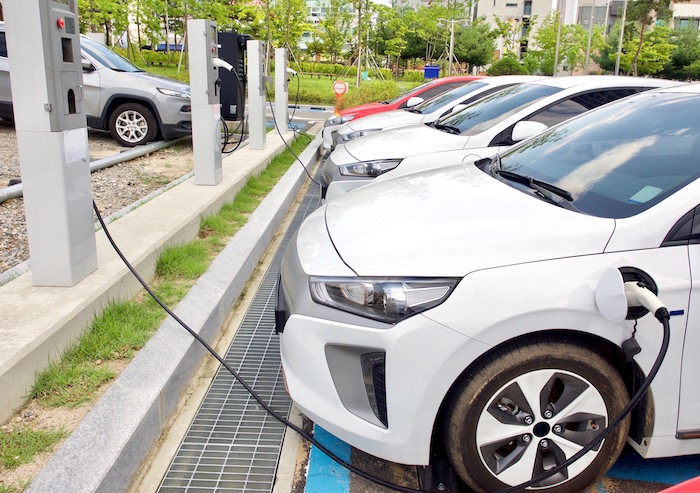
In 2015 Volkswagen was cited by EPA and the California Air Resources Board for violating emissions standards by selling diesel vehicles equipped devices that allowed the cars to cheat at federal emissions tests. The federal government sued and in 2016 VW settled the cases for $14.7 billion. Of that, $55 million was set aside for federally recognized Tribes which they can use to replace old, polluting diesel vehicles or equipment with new, cleaner models, or even install electric vehicle charging stations.
The Institute for Tribal Environmental Professionals (ITEP) was named as the Technical Assistance Provider. ITEP supported Tribes with webinars and other training resources, as well as one-on-one assistance with navigating the process of applying for and receiving funds from the settlement. The program closed out on June 29, 2025 after all of the participating Tribes had submitted their final funding reports.
NTAA was integral in securing the Tribal Trust Agreement, establishing the technical assistance program, and ensuring the development of the Tribal Advisory Council.
On April 1, the NTAA Mobile Sources Work Group heard a presentation from EPA on the Future of Transportation: Upcoming Legislation. You can access the presentation, which contains links and resources, by clicking the link.
The Columbia-Willamette Clean Cities group gave a presentation on Alternative Fuels Solutions to NTAA’s Mobile Sources Working Group at its October 2019 meeting. The presentation goes through the various alternative fuels currently available and describes what types of vehicles & equipment can run on each, along with pros and cons of each option. The presentation emphasizes ways in which alternative fuel vehicles can provide environmental and performance benefits for vehicle fleets, while often reducing maintenance needs and operating costs. This presentation can be a useful resource for Tribes considering purchasing alternative-fuel vehicles with their VW Settlement funds.
The EPA’s Office of Transportation and Air Quality was eliminated as part of a broader reorganization plan. The move is part of a broader reorganization plan that aims to eliminate offices responsible for regulating greenhouse gas emissions and air pollution.
EPA WEBLINKS
Mobile Source Pollution and Related Health Effects
Transportation, Air Pollution, and Climate Change
Recent Announcements Related to Transportation, Air Pollution, and Climate Change
NTAA continues to seek out funding opportunities for Tribes to help them develop policies and actions related to Mobile Sources. Please check back as this list may be updated frequently.