
Perhaps no other community will or has experienced the adverse impacts of erratic weather patterns more than the nation’s Indian Tribes. Rising sea levels, coastal flooding and erosion, melting sea ice, loss of traditional hunting and fishing resources, extended drought and unpredictable farming conditions threaten every aspect of indigenous cultures.
NTAA has worked with Tribes to develop new responses, actions, and policies regarding greenhouse gases. Recently, they have included the Reconsideration of the Greenhouse Gas Reporting Program, the proposed repeal of the Greenhouse Gas Emission Standards for Fossil Fuel-Fired Electric Generating Units, and the Reconsideration of the 2009 Endangerment Finding and Greenhouse Gas Vehicle Standards, as well as other EPA regulatory changes related to greenhouse gas emissions.
While more information may be found in the NTAA Policy Resource Kits library, the following documents provide information and background on these issues.
On July 29, 2025, the Department of Energy (DOE) issued a draft report titled “A Critical Review of Impacts of Greenhouse Gas Emissions (GHG) on the U.S. Climate.” The report was developed by DOE’s 2025 Climate Working Group (CWG), a group of five scientists assembled by Energy Secretary Chris Wright, and is being used to justify the rescission of the 2009 Endangerment Finding. NTAA opposed the draft report and recommended that DOE conduct a comprehensive review and revision of the report to assess the specific impacts of GHG emissions on Native Nations and Tribal communities. NTAA also recommended that DOE offer consultation to Tribes on this report.
The most commonly know greenhouse gas, carbon dioxide (CO2) is released into the atmosphere from burning coal, oil, and other fossil fuels. Carbon dioxide creates a blanket insulating the earth and making it hotter, hence the name “greenhouse effect.” Carbon dioxide is taken up by other earth systems such at the oceans, forests, soil, etc. but these systems can only absorb so much. Moving away from fossil fuels and embracing renewable energy is vital to slowing down climate change.
Additionally, carbon sequestration is another mitigation effort, and more carbon sequestration methods are needed to address the overabundance of carbon dioxide in the atmosphere. Because carbon dioxide is the most prominent greenhouse gas, all other greenhouse gases are measured against carbon dioxide to measure their global warming potential (GWP) or how much heat a greenhouse gas traps in the atmosphere over a specific period, compared to carbon dioxide, which has a GWP of 1.
Carbon dioxide, once released, remains in the atmosphere for thousands of years, which is longer than all the other greenhouse gases. New technologies are being developed to “capture” or “sequester” carbon dioxide, although these technologies are not yet widely used.
Methane (CH4) is one of the more potent greenhouse gases with a “global warming potential” of approximately 84 to 87, making it about 84 to 87 times more effective than carbon dioxide at trapping heat. On the flip side, methane only remains in the atmosphere for about 9 to 12 years. Major sources of methane pollution come from agriculture, the burning of fossil fuels, waste management (landfill gases and wastewater treatment), and natural sources such as wetlands and geological seepage.
Nitrous Oxide, or N2O is a colorless and odorless gas, also known as “laughing gas,” and has historically been used as an anesthetic in medical procedures. N2O is a potent greenhouse gas, with a global warming potential 200 to 300 times greater than carbon dioxide, contributing not just to global warming, but also ozone depletion. It is released into the atmosphere primarily through agricultural purposes with the use of nitrogen fertilizers, but it is also released from land use and industrial activities. Nitrous oxide can remain in the atmosphere for a little over a hundred years.
Hydrofluorocarbons (HFCs) are used in aerosol sprays and refrigerants. Although the uses of hydrofluorocarbons in aerosol propellants have been drastically reduced with the Kyoto Protocol to repair the ozone layer, hydrofluorocarbons are still commonly used in refrigerants and air conditioning and are potent greenhouse gases with a global warming potential that is hundreds to thousands of times more potent than carbon dioxide. Hydrofluorocarbons do not remain in the atmosphere as long as other greenhouse gases (about 15 years). Other refrigerants have been developed with much less global warming potential but adoption of these is not yet widespread.
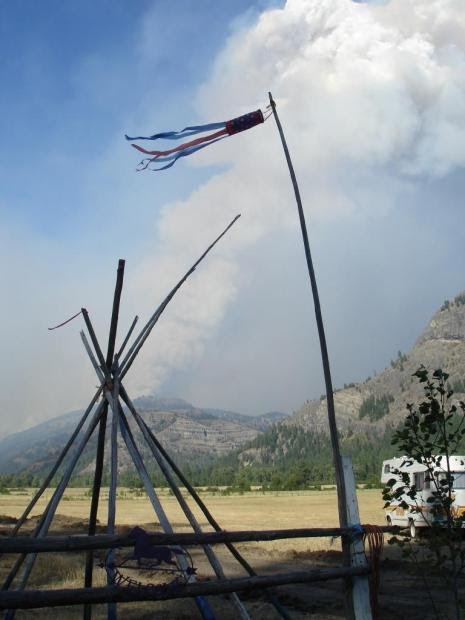
There is an inextricable link between climate variability, energy, and most air quality issues. Nearly everything NTAA does, in one way or another, is affected by a changing climate.
A good place to find information is our Policy Resource Kits, the majority of which include impacts to the climate.
Each year, NTAA publishes the Status of Tribal Air Report, which includes a section on erratic weather patterns.
The National Congress of American Indians provides a good introduction to how climate change affects Tribes along with resources and other information.
More resources and training can be found on the Institute for Tribal Environmental Professionals’ “Tribal Wellbeing for Seven Generations Program (TW7G).”
TW7G has developed their second volume for The Status of Tribes and Climate Change (STACC) Report. STACC volume 2 is the culmination of efforts from a diverse and expansive community of Knowledge Holders who gave their time, energy, and writings. The report can be found on ITEP’s publication page.
ITEP’s Tribal Adaptation Planning Toolkit is a collection of templates and other resources developed by the Institute for Tribal Environmental Professionals to assist Tribes in their climate change adaptation planning process.
Many Tribes have developed or are developing policies and plans to deal with the impacts or erratic weather.
The Tribal Climate Change Project is a joint effort by the University of Oregon, with support from the USDA Forest Service Pacific Northwest Research Station, the Affiliated Tribes of Northwest Indians, the Bureau of Indian Affairs and the North Pacific Landscape Conservation Cooperative. Here you’ll find resources for Tribes as well as links to Tribal Climate Adaptation plans from around the US.
The Tribal Resilience Database project brings together a group of project partners and advisors representing more than a dozen Tribes across North America to create a culturally sensitive, easily accessible, and useful database of climate adaptation strategies and community examples already published by Tribes that can be used to inform ongoing and new climate adaptation strategies and resilience work in Tribal communities.
The BIA Tribal Resilience Program (TRP) provides federal-wide resources to Tribes to build capacity and resilience through leadership engagement, delivery of data and tools, training and tribal capacity building. Direct funding supports tribes, tribal consortia, and authorized tribal organizations to build resilience through competitive awards for tribally designed resilience training, adaptation planning, vulnerability assessments, supplemental monitoring, capacity building, and youth engagement.
EPA research improves knowledge of the impacts of climate change on human health and the environment. The scientific information and tools can be used by Tribal communities to effectively and sustainably manage the impacts from a changing world.
NTAA continues to seek out funding opportunities for Tribes to help them develop policies and actions related to Climate Change. Please check back as this list may be updated frequently.